
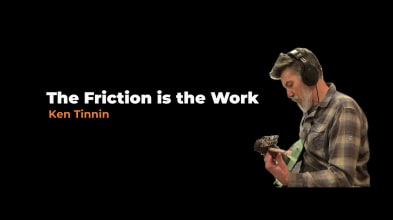

I thought I had today’s post all mapped out. After my last two posts, “The High Cost of Ignoring Friction” and “Recurring Problems,” I was sure I would write about alignment. I had the idea fully worked out in my head—aligning the areas of my life so they support one another, because I was sick of one area or problem stealing the spotlight and destabilizing my life. I even had an analogy in mind, comparing it to how a sinking fund prevents unexpected expenses from disrupting your entire budget.
In my initial alignment effort, I began analyzing not only the areas of my life but also the actions I was taking within them—specifically, my habits and routines. What I uncovered not only changed my thinking but also sparked a multitude of questions and shifted my plans for what I would write about.
My life has become deeply entrenched in habits and routines. I write or journal most mornings; I exercise five or more times a week; I play or practice guitar most days; and I have a handful of chores that keep me organized and prepared. I’m organized, disciplined, and consistent. All these things are objectively good until they become a trap. But this raises a question: Am I so disciplined and consistent that I’m, at times, inflexible? Am I so locked in that I’ve allowed myself to be locked out of other possibilities? I realize there’s a dichotomy here as well—I could be inconsistent and undisciplined, which would create its own set of problems.
And there’s another question that keeps coming up—why? Why am I doing these activities? What outcome do they tie back to? This, I think, is the real question. Exercise and guitar playing are probably my two most ingrained habits—and they take up a large share of my time outside of work. I know why I exercise and why I choose the exercises I do. I attend Muay Thai classes because I love the community and enjoy learning while exercising. I run because I enjoy it. It’s a great way for me to clear my head, and it’s something I can do with my significant other. I weight train because I know it’s good for me. I don’t particularly enjoy it, but I do it because it directly supports other activities I enjoy.
My guitar playing is a different story. It happens automatically, almost without conscious thought—this is both a good and a bad thing. It’s been on autopilot for so long that I default to familiar patterns. I swear, if I play the riffs to Hair of the Dog, All Right Now, or Breaking the Law one more time, I might go insane. I love music. I love learning, and I love playing guitar, but since I stopped teaching last year, my playing has become so disconnected from any real outcome that my practice routine feels like an ever-escalating game of whack-a-mole, where I bounce from one “great idea” to another faster than a hummingbird flaps its wings! A year ago, I thought the answer was writing original music—it might be, but I also think there’s a layer between that and where I am now.
What is that layer? I wish I had the answer, because if I did, I think I’d feel a whole lot better. I suspect it starts with stepping out of my comfort zone and accepting that, even after 30-plus years of playing and 15 years of teaching, I still have a lot to learn. Or maybe it’s a whole lot simpler—what kind of guitarist do I really want to be, or what role do I want the guitar to play in my life?
I’m not trying to reduce this to the problem of my unstructured guitar practice, because that doesn’t even begin to answer the “What am I doing and why am I doing it?” Because beneath those questions is another: “How am I going to fund this?” I’m not referring to money here, but time and energy.